Most of what's on this page started as a tool for a server I run,
a script to skip a chore, or an excuse to learn something new.
Then it got finished, because I was the one using it. One of them
now runs on about 700 Minecraft servers.
I'm studying computer science, big data and AI,
with maths and statistics on the side. School covers the theory.
The projects on this page are where I actually learn: by building
something, breaking it, and trying again.
I follow a project all the way through, from the first architecture
sketch to the boring maintenance afterwards. Security
gets a lot of my attention, mostly because I run servers and have
learned the hard way what happens when you don't.
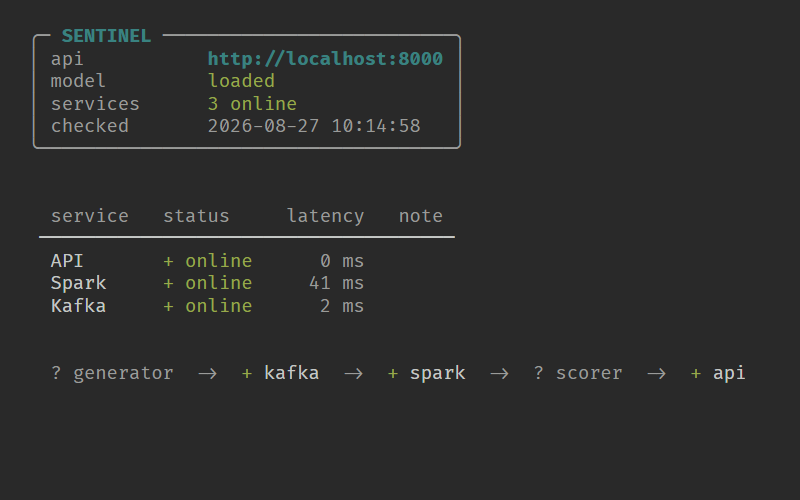
Streaming anomaly detection on crypto trades: Kafka carries them,
Spark turns them into per-minute features, an Isolation Forest flags
what looks wrong. A simulator injects anomalies on purpose, so the
detector gets measured rather than trusted.
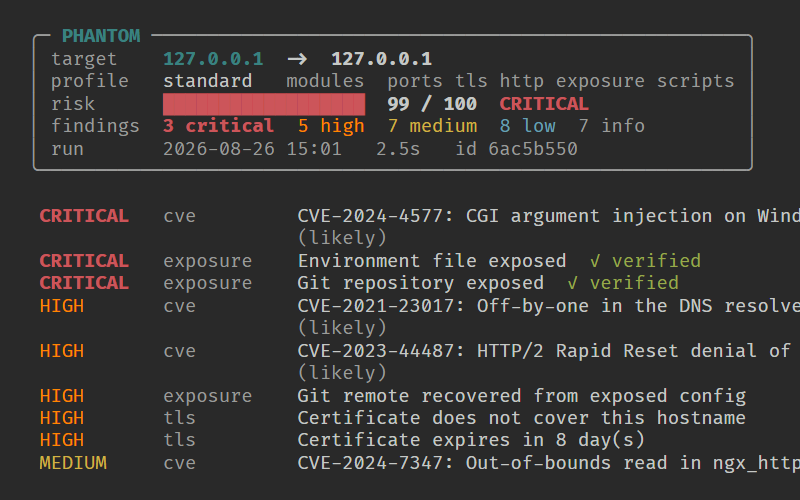
Maps the attack surface of a host you're allowed to scan: open ports
and what's behind them, DNS and subdomains, TLS and HTTP posture,
files forgotten on a web root. The port scanner is its own Rust binary.
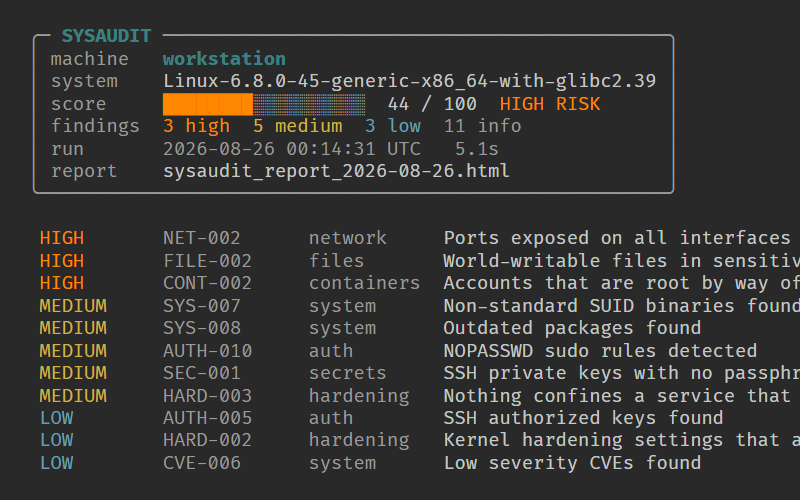
A command-line security audit of the machine you're sitting at, on
Linux, macOS or Windows. Out comes a score out of 100 and one
self-contained HTML report, each finding with the commands that fix it.
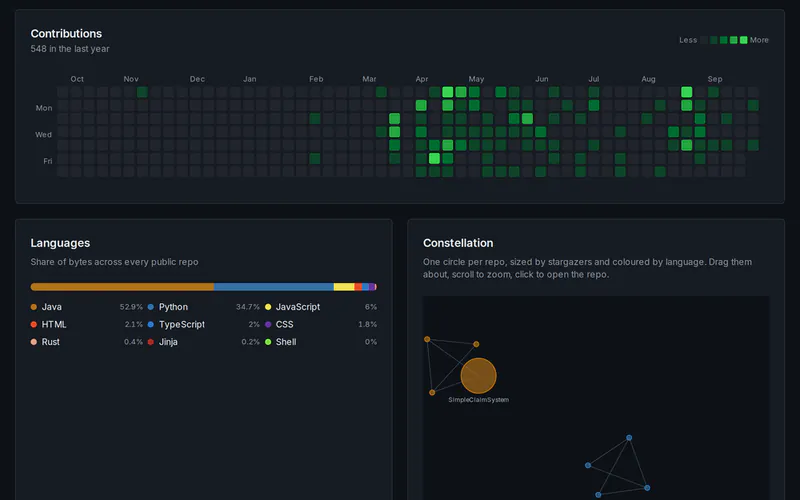
Type a GitHub username and the profile comes back as a constellation
of repos, a clickable contribution heatmap, languages over the years
and a Wrapped-style recap with its own URL. No login anywhere.
Two claim plugins and a framework with its own addons, written in Java
and running on real servers, some open source and some paid. The corner
of programming I keep coming back to.
SimpleClaimSystemopen sourceChunk-based land protection: menus to claim, merge and sell territory, 30+ settings per claim, map integrations, an API for other plugins. 1.18+, Folia included.100k+ downloads, about 700 servers, rated 4.9/5 on Spigot
SimpleClaimSystem 2paidThe rewrite, for servers that outgrew a single permission list: roles per claim, 130+ permissions, 70+ protection flags, rent, an exportable audit log.
XCoreopen sourceThe framework the other X plugins sit on: three cache layers, cross-server sync over Redis, an addon loader, GUIs described in YAML, a multi-currency economy, a web dashboard.
XBanspaidBans, mutes, warns and jails, plus ban waves. A Bayesian chat classifier trained in five languages reads through obfuscation, and alt detection weighs eleven signals.
XAuctionHousepaidFixed-price listings and live auctions in any currency XCore knows, with snipe protection, tiered bids, search and price history.
XLoginpaidOnline mode decided per player: premium accounts connect with their skin and no password, everyone else registers. TOTP two-factor, sessions shared across servers, one jar for Velocity, BungeeCord and XCore.
XAntiLagpaidPrevention rather than cleanup: per-chunk caps, mob and item stackers, redstone clock detection, and a TPS monitor that steps up optimisation as the server degrades and back down as it recovers.